
Revisiting "The Warning"
Be careful what you wish for.

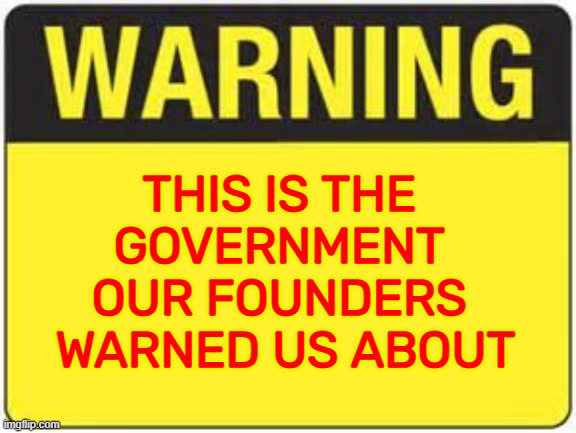
Given all that has happened in the last two or three months, all that has happened in just the past 10 days, and even the past 24 hours (an essay still to come), it might be worth revisiting this essay, written and published barely a month after Donald Trump began his second term in the White House. Its title is eerily prescient, something one cannot take any great pleasure in saying.
In July of 1998, a federal regulator warned members of Congress about an unregulated system that, if left unchecked, would eventually cripple the American economy and shatter much of the nation’s way of life.
Brooksley Born, head of the Consumer Financial Protection Bureau, saw the risks in the little-known and little-understood derivatives market and tried to sound the alarm. But she was crushed by the financial and political establishment. Alan Greenspan, Robert Rubin, and Larry Summers—some of the most powerful economic voices at the time—dismissed her concerns, believing markets could correct themselves. They told Capitol Hill and the media that Born’s views were not to be trusted, that she was running a backwater agency, that her warnings were a power grab, and that she had no clear understanding of the products she sought to regulate. Entrusting her with that authority, they insisted, would be a grave mistake.
Congress, influenced by the financial industry, agreed.
They were wrong. The 2008 financial crisis, fueled by the very instruments Born had warned about — credit default swaps and other opaque derivatives — spiraled out of control. By the time the system collapsed, it was too late, devastating millions of people in the U.S. and worldwide. Innocent people, guilty only of blithely going about their lives, not knowing or realizing what was happening under their very noses, lost their jobs, their homes — everything.
Today, the American political landscape is following this same path. The current administration isn’t just reshaping policy; it is redefining the very fabric of the nation. It isn’t merely rewriting the structure of governance; it is reordering the nation’s fundamental DNA — the essential framework of how America operates — from the rule of law and democratic norms to national and cultural identity.
Meanwhile, millions of Americans continue to go about their lives, oblivious to the changes happening around them. Those who recognize what is occurring either lack the platform to sound the alarm, are ignored or condemned when they attempt to do so or remain silent, fearing the consequences.
The result is the progression of gradual threats, an unimpeded creeping authoritarianism. In its final form, institutions will have shifted, power consolidated, and what was once considered unthinkable will have become the new normal. The lesson from 2008 isn’t just that crises can be predicted—it’s that ignoring warnings about the future often leads to irreversible consequences.
Disturbing signs are everywhere. Take, for instance, Donald Trump’s decision to remove “multiple individuals” from the Kennedy Center for the Arts' Board of Trustees and install himself as chairman. “They do not share our vision for a Golden Age in Arts and Culture,” he wrote on his social media platform.
All we need now is our own Leni Riefenstahl. That’s less a joke than a chilling analogy. State-controlled or state-approved art often becomes propaganda rather than free artistic expression. Riefenstahl, a German film director, made documentaries glorifying Nazi Germany. Should the role of art in a democracy be shaped by political loyalty or independent vision? Perhaps we can ask the Kennedy Center trustees’ new chairman.
Consider a major policy issue like immigration. Without question, the nation needs a smart, comprehensive immigration reform package. There hasn’t been one since 1986. But this administration’s thrust is less about a corrective and more about a binary exclusion of anyone “not like us,” whoever “us” is.
It doesn’t stop with immigration or the arts. It extends to every corner of society, any demographic, any profession, any institution: journalists, military leaders, federal health officials, teachers, diplomats, scientists, and the LGBTQ+ community, even a person of faith. Anyone contesting the president’s view is one of “them,” subject to demonization, deportation, termination, marginalization, demotion, or denial of access to government programs and social services.
This is all driven by someone who has long accused liberals of censoring conservative voices and weaponizing the government against him. Yet he openly vows to censor, punish, and prosecute liberal voices, and his followers embrace it fanatically, with glee, even, never conceding its hypocrisy, immorality, or outright illegality.
But hypocrisy can be overlooked, laws ignored or broken, and morality’s meaning manipulated in pursuit of a greater purpose: a racial and cultural eradication of anyone “not like us” or what was once called “the other” and now seems to be called “woke.” Such rhetoric has amplified and legitimized the xenophobia, nativist sentiment, and racism that has always existed in this country. It’s not just about demographics; it’s about ideology. It’s about redefining what it means to be an American and relegating, even erasing, anything that doesn’t fit.
In his recent New York Times newsletter, David French noted a tweet from Jan 6, 2021, directed at multiple Black lawmakers and public figures, telling them to ‘learn their place’ and ‘take a knee’ before MAGA.
“In October,” French continued, the same individual posted on X: “Competent white men must be in charge if you want things to work. Unfortunately, our entire national ideology is predicated on coddling the feelings of women and minorities, and demoralizing competent white men.”
The comments were posted by Darren Beattie, a staffer for former Congressman Matt Gaetz, and recently hired by Secretary of State Marco Rubio as his acting under-secretary of state for public diplomacy.
And what does he imagine should come next? Stars on clothing? Prosecution? Imprisonment?
For what it’s worth, Beattie’s first post received nearly 4,000 “likes.” The second received more than 7,500.
We’re not at the point of forced identifiers or mass imprisonment (though immigration policy seems to be moving in that direction), but the playbook is familiar: redraw the boundaries of national identity, strip rights from anyone outside those boundaries, and use state power to enforce conformity. Indeed, what’s left of the federal workforce will be under constant surveillance, every keystroke, every word, watched for signs of disloyalty. By who? And who will watch them?
This exclusionary ethos isn’t just limited to the future. Trump, by reversing policies and revoking specific security clearances (all of which seem targeted), appears to be engaging in revisionist history, attempting to erase everything that transpired during the four years between his two presidential terms.
It’s another unsettling historical parallel to the rise of Naziism. Just as post-WWI Germany saw a movement to erase the so-called "humiliation" of the past and restore national greatness, Trump seems driven to erase the Biden years as an aberration and pick up where he left off — as if his first term was interrupted rather than ended, the rightful leader reclaiming lost ground.
Equally alarming is our tepid reaction to all this. Whether from fear, indifference, exhaustion, or political calculation, the opposition seems muted. Some critics do speak out, but there’s no significant pushback, no urgent counter-narrative dominating the conversation.
Maybe it’s because Trump’s approach is so relentless that opponents struggle to keep up, or maybe it’s a sign that people have grown numb to these kinds of power moves. Or worse. Shuttered institutions, the work they do, the data they provide, and the people in their employ are like books on a dusty library shelf. We don’t see them, we don’t use them, we don’t think about them, they don’t affect us. The Constitution, democracy, and the rule of law — we give it lip service. We hardly even understand it.
Or maybe we think, “It can’t happen here.” It’s precisely that belief that allows such things to happen. When people assume their country is exceptional, and its democratic institutions are unshakable, they become complacent. They dismiss warning signs. They rationalize small steps with seemingly justifiable slogans — law and order, border security, government waste, “restoring traditional values.”
So far, only the judiciary has stood firm as a check on power, but that may not matter. Courts have ruled against multiple executive actions on constitutional grounds, yet the White House has signaled that such rulings can simply be ignored. Unlike other branches, the judiciary has no enforcement power. They can cite someone for contempt. They can impose fines. They can even issue warrants for arrest. But the Justice Department would have to act on it, and a Justice Department transformed to obey the president’s every whim can direct its marshals to ignore any court order.
That’s not a hypothetical. In 2021, J.D. Vance explicitly stated that Trump’s next term should be about purging the government of anyone unwilling to do his bidding and replacing them only with loyalists.
“Maybe we have to look at the judges,” Trump said in his Oval Office press conference. Meaning what? Fox News posted the quote on Facebook. It received nearly 24,000 likes in just 24 hours, along with comments about judges being corrupt and needing to be investigated. “Get rid of those who are not on board for the Trump agenda,” wrote one person.
Federal judges can only be removed through impeachment by Congress for misconduct or other serious offenses. Would an invertebrate Congress redefine the terms of misconduct to remove a judge who displeased the president? It’s not hard to imagine anymore.
What then? Who ensures compliance? If court orders can be disregarded with impunity and even penalty, of what value is the rule of law?
It’s frightening enough to think how many agreed with Trump’s suggestion or Mr. Beattie comments. More frightening, however, are the number of conservatives, including some among the MAGA faithful, who actually disagree and even find such comments disturbing or repugnant — because they are — but remain silent rather than dare to criticize their home team. They are enablers of the worst kind. History’s greatest atrocities weren’t just committed by the architects of oppression but were made possible by the millions who let it happen by their silence. Sir Thomas More almost had it right when he said, “Silence is consent." Silence isn’t just consent; it’s participation.
And it comes with a price. Years ago, I owned a book about WWII recounting the Allied campaign from D-Day to the liberation of concentration camp victims. There were photos throughout depicting the Allied advance. The penultimate chapter describes the horror soldiers saw in liberating the camps. A series of photos portrayed the evolution of the Nazi movement, from youths at picnics and women at beach outings celebrating a new, prospering Germany, to street-lined crowds waving and saluting Adolf Hitler in a passing motorcade, to those ominous, massive rallies, the German blitzkrieg, and then, to its bombed-out cities and finally, the camp victims — the emaciated survivors, the piles of corpses. Under each photo, the captions told the Nazi story from rise to demise to ghastly atrocity.
"Who would have believed,” the captions began, “that we Germans…” “would be capable…” “...of something like…” and under photos of the camp victims, the caption read, “this.”
That kind of progression — documented step by step, from euphoria to horror — is exactly why history matters. It’s a reminder that these things don’t happen all at once; they unfold gradually, under the guise of progress, national pride, and renewal. The early photos — the celebrations, the smiling faces — are the most chilling in hindsight because they show how ordinary people embraced something whose outcome they failed to foresee. By the time the last photo is seen, the reality is undeniable and irreparable.
I hate to make such Godwin’s law comparisons. They feel melodramatic, extreme, even alarmist. But when the patterns are there, ignoring them is riskier than acknowledging them. The ugly parts of human history should be discomfiting and give pause. Recognizing the early warning signs of a potentially dystopian future isn’t melodrama — it’s vigilance.
As if fate were completing a circle, the very agency Brooksley Born led is now among those Trump seeks to restructure and weaken. He also aims to shutter the Consumer Financial Protection Bureau. How ironic that the man who claims to be fighting government corruption wants to neuter and dismantle agencies designed to protect the public from financial corruption. It’s almost as if history is folding in on itself, repeating the same pattern of dismissing oversight in favor of unchecked power. We’ve gone from “markets and powerful interests should be left alone to operate as they see fit, without government interference” to “I alone can fix it.”
It took the Great Recession for Alan Greenspan to concede that his lifelong belief in laissez-faire economics was wrong. What will it take for us to come to a similar realization about the history being forged today?
I hold little hope for people recognizing the warning signs and heeding them soon enough to stop where the nation seems headed. We tend to recognize crises only in hindsight — when the damage is already done, and the structures enabling the shift are firmly in place.
That doesn’t mean awareness is futile. Even if stopping the full momentum seems unlikely, resistance still matters. Every voice that calls attention to the danger, every record that documents what’s happening, makes it harder for those in power to rewrite history later. If nothing else, it ensures that when the reckoning comes — and it always does — no one can honestly say, “We didn’t see it coming.”
History is a great teacher. Its lessons are always there, whether we see them or not, whether we choose to or not. And if we choose not to, a greater teacher emerges: regret. Regret, however, teaches only in the aftermath. It doesn’t prevent, it doesn’t warn, it offers no solutions on how to make things right; it serves only as a painful reminder of where we failed, of what could have been and wasn’t. If all that many of us fear happens, and I sincerely hope it doesn’t, I will not gloat, I will not feel vindicated, I will not say I told you so. Rather, I will mourn what may well be the end of the great American experiment.
Who would have believed that we Americans…?