
Unconditional Surrender: The War of the Ultimatum
In the conflict with Iran, Donald Trump’s cosplay of command reveals an enterprise run on slogans, bluster, and the perilous gap between rhetoric and strategy.


There was a time when the phrase “unconditional surrender” carried a certain weight.
When Ulysses S. Grant used it during the American Civil War, he did so while commanding armies in the field and surrounding an enemy with no viable path of escape. When the Allies invoked it against Hirohito’s Japan during World War II, it came after years of total war, continents in flames, and millions already dead. It was not a slogan. It was the final line of a long and terrible calculation.
Which brings us to Donald Trump, who has now declared that the war he launched against Iran will end only with that same demand: unconditional surrender.
One imagines the phrase appealed to him immediately. It has the right theatrical ring to it — simple, absolute, and easily chanted on television. Trump has always favored words that sound decisive over ideas that actually are cogent. In his vocabulary, diplomacy is a “deal,” war is a form of negotiation, and complex geopolitical conflicts are reduced to the same blustering bravado he once used to fire contestants on a reality show.
The problem is that history is not a branding exercise, and Iran is not a bankrupt Atlantic City contractor waiting to be stiffed once the ink dries.
The demand itself is strategically incoherent. The United States has launched airstrikes, yes, but it has no ground forces in Iran, no clearly articulated war aims, and no realistic path to forcing the capitulation of a country of nearly ninety million people that has spent the better part of half a century preparing for precisely this confrontation. One does not demand unconditional surrender from an adversary one is not even attempting to conquer.
Yet the demand reveals something important — not about Iran, but about the man issuing it.
For Trump, war is not a grim undertaking measured in blood, logistics, and long-term consequences. It is spectacle. It is posture. It is the projection of strength for an audience that mistakes bluster for strategy.
Unfortunately for him — and for everyone else — the audience he is trying to impress does not live in Tehran.
The people running Iran do.
The problem with theatrical ultimatums is that they only work when the other side believes you have the means — and the intention — to enforce them.
Iran has no such reason to believe it.
From Tehran’s perspective, negotiating with Donald Trump would require a degree of political amnesia bordering on the supernatural. This is, after all, the same president who abandoned the Joint Comprehensive Plan of Action, the multilateral nuclear agreement painstakingly negotiated during the administration of Barack Obama, and who has since demonstrated a curious habit of attacking the very country he claims he wants to negotiate with.
As for Iran, there’s no point in negotiating your complete annihilation with a person who has already bombed you twice during negotiations and pulled out of the last negotiated agreement because he can't stand that a black guy did it.
Diplomacy generally requires at least the faint possibility that agreements will be honored. Trump’s record suggests the opposite. In his world, a “deal” is not a mutual arrangement but a temporary performance — the ceremony before the inevitable betrayal.
Under those conditions, Tehran has every incentive to do exactly what it appears to be doing: wait.
For more than four decades, since the upheaval of the Iranian Revolution, Iran’s leadership has assumed that a direct confrontation with the United States would eventually come. Their strategy has never depended on defeating America outright — a fantasy entertained only by propagandists — but on something far simpler: endurance.
They do not have to win. They merely have to prevent the United States from achieving whatever objective it claims to have, which, as we have seen, seems to change with the prevailing wind. There's no plan, not even a concept of a plan. All Iran has to do is hold out for a few months and wait for the cascading logistic failures to propagate upward.
At the moment, that task appears surprisingly manageable.
Washington has offered no clear definition of victory. Regime change has not been declared. Occupation is not being discussed publicly. Negotiations are supposedly the goal, yet the only terms offered amount to surrender before the conversation even begins. Meanwhile, American munitions stockpiles are reportedly under strain, supply chains are stretched across multiple theaters, and the administration has yet to explain how a limited air campaign is supposed to compel the capitulation of a country that has spent decades preparing to absorb exactly such attacks.
In other words, the strategic horizon appears to consist largely of improvisation.
Which may explain the increasingly unsettling reports that the White House has privately entertained the possibility of inserting American ground forces into Iran for “limited” operations. History offers a thick catalog of examples demonstrating how quickly limited deployments have a way of expanding into something far larger and far bloodier than originally advertised.

Urban warfare has a particular talent for turning confident theories into grim arithmetic.
Consider Fallujah in 2004: U.S. Marines stormed a single Iraqi city (tiny vs. Iran; tiny vs. Tehran), facing brutal house-to-house fighting that became the fiercest battle since Vietnam: 95 Americans killed, 560 wounded, thousands of structures destroyed, yet insurgents slipped away to fight another day. Scaling that to just Tehran’s urban sprawl? Catastrophic. Have you an appetite for more? Consider:
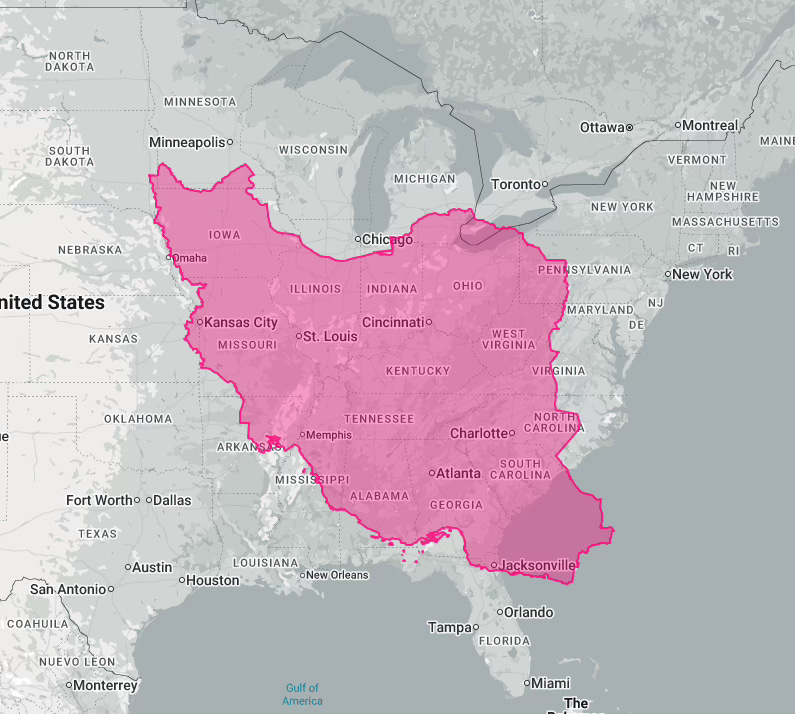
The irony in all this is difficult to miss. Western commentary frequently describes Iran’s ruling clerics and the **Islamic Revolutionary Guard Corps as ideological fanatics. And there is truth in that description; their worldview is steeped in religious absolutism and revolutionary mythology.
But fanaticism, for all its many sins, at least possesses the virtue of internal logic. The people running Iran have spent decades preparing for a confrontation with the West and are psychologically, politically, and militarily conditioned to endure it.
Across the negotiating table sits a man whose strategic thinking rarely extends beyond the next news cycle.
And that asymmetry — between ideological discipline on one side and improvisational bluster on the other — is what makes the current moment so dangerous.
Iran’s leadership believes history is on its side.
Trump appears to believe television is.
Trump seems to think his bluster will intimidate Iran. This is spectacularly foolish. His life has been nothing but posturing for the cameras and no actual substance there at all, yet there’s a segment of the U.S. population that eats it up and also thinks it could work.
Bluster: The only currency Donald Trump's devotees accept — and the only one Iran laughs at. It would be laughable if it were not so catastrophic.
The danger is not merely that the strategy is unclear. It is that the rhetoric surrounding it is beginning to drift into something even more reckless.
American officials have already taken to describing the confrontation with **Iran in language that edges uncomfortably close to civilizational struggle — a framing that Iranian hardliners have spent decades insisting was inevitable. For the clerical leadership in Tehran and the commanders of the Islamic Revolutionary Guard Corps, the idea that the West ultimately seeks not compromise but submission has long been a foundational article of faith.
Every bomb dropped in the absence of a coherent diplomatic path strengthens that argument.
Every maximalist demand confirms it.
And nothing could more perfectly validate their narrative than the spectacle of an American president demanding “unconditional surrender” from a nation he is not even attempting to occupy.
It is worth remembering that ideological regimes thrive on confrontation. Conflict provides clarity. It silences internal dissent, rallies the population, and transforms political failures into patriotic sacrifice. A prolonged struggle against the United States is not necessarily a nightmare scenario for Iran’s most hardline factions. In many respects, it is the very struggle they have been predicting — and preparing for — since the upheaval of the **Iranian Revolution.
The longer the conflict drags on without defined objectives, the more it risks becoming exactly the kind of grinding, ambiguous confrontation that such regimes are built to endure.
This comes with an additional nugget smartly noted by Peter Baker of The New York Times. We know from our recent past — the last 75 years — that wars often lose public support over time. Trump in unilaterally opening a military campaign against Iran, started this one with little public support at all. He is the first president in modern times to take the United States to war without the backing of the public.
Meanwhile, that same American public has been offered little explanation beyond the assumption that force alone will eventually produce the desired outcome. Yet modern history provides ample evidence that wars launched without clear political goals rarely end neatly. They expand, they metastasize, and they acquire their own grim momentum.
At present, the United States appears to be drifting toward that familiar territory — escalation without strategy, violence without clarity, and rhetoric that grows more absolute even as the path forward becomes more obscure.
And at the center of it all is a president whose understanding of power has always been shaped less by the realities of governance than by the optics of performance.
For **Donald Trump, the language of war seems to function primarily as theater: declarations designed for maximum impact, ultimatums crafted for television, and slogans that sound decisive regardless of whether they correspond to any coherent plan.
Unfortunately, wars are not episodes of a reality show.
They are slow, brutal affairs measured in ruined cities, exhausted armies, and lives that do not return once they are spent.
The tragedy of the present moment is that one side of this confrontation appears to understand that perfectly well.
The other appears to believe it is still performing for the cameras.
Which is how the world has arrived at the deeply unnerving spectacle of a war being conducted not by statesmen or strategists, but by entertainers — a reality-television star and a cable-news pundit — treating the gravest undertaking of any government as though it were simply another form of broadcast programming.
History, unfortunately, does not award ratings.
It collects consequences, and don’t expect Iran to be the only one paying them.
When viewing the spectacle of friends waving flags and posting pictures of Iranians celebrating around the world, I can only shake my head at the stupidity of what I call "premature enjubilation". So what if Jews and Iranians celebrate the "freedom of women to shed their 'burkas' (good grief, they can't even identify the clothing they're upset about on behalf of the women who wear it) in the bomb-free safety of Canadian campuses and U.S. town squares? The thoughtless theatrics of it all is astounding. I plan to shove it back in their faces when my warnings that there's no mission accomplished finally resonates in their thick skulls.
The stupid, it burns. 🙄